
Maps Out, it’s time to travel to Mesese.
In the morning and evening, I take a boda ride through Jinja, Walukaba, and Mesese on my way to and from Imprint Hope.
Jinja is a city holding close to 300,000 people. It does not have skyscrapers, a subway system, or many of the things the western world would associate with a large city, but it is full. Alive. Moving.
On a normal Monday morning, cleaners — normally women — sweep the main streets before much of the city has fully awakened. Dust and debris are gathered into piles while sections of the road are blocked off so the remaining cleaners can finish their work. At that point, both directions of traffic merge into one remaining lane.
What follows often feels like a game of chicken between taxis — large transport vans, trucks, government vehicles — and boda drivers swerving between narrow openings in the road. More than once, I have found myself sitting between one large vehicle and another, trying not to think too hard about the space between them.
Once your direction is set, you pass a driving circle filled with taxis arriving and departing while men lean out the windows, calling destinations to passing pedestrians in hopes of filling the remaining seats.
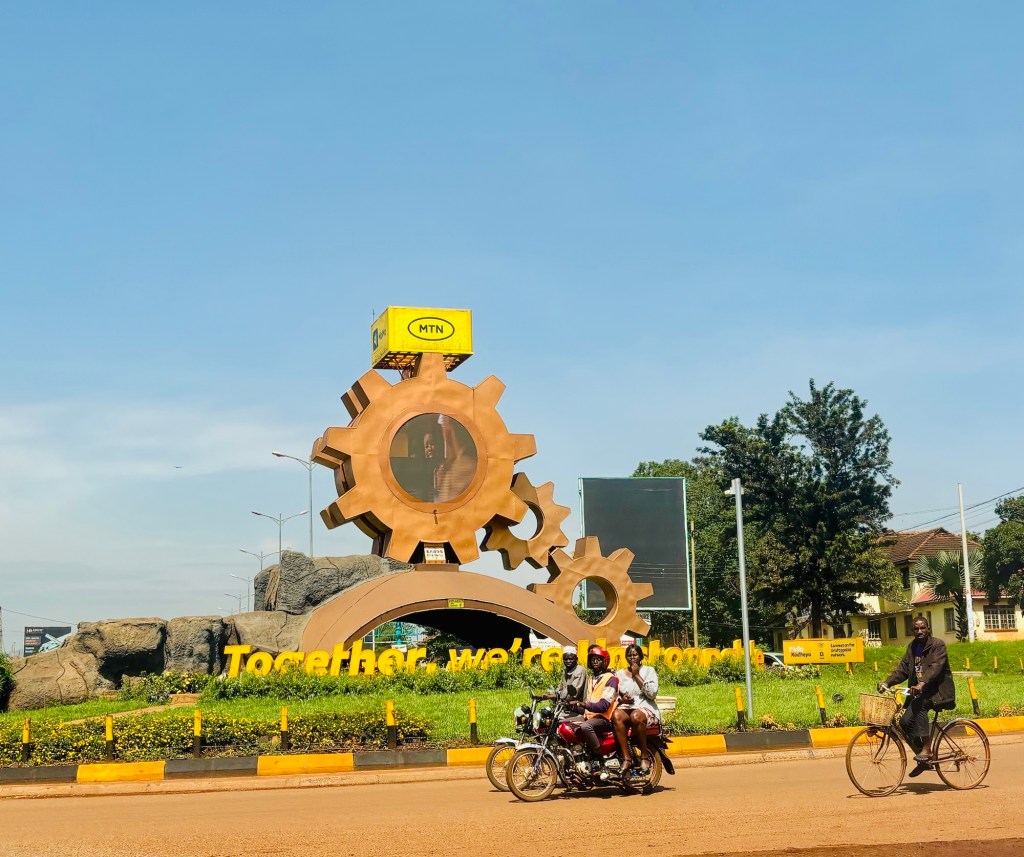
Then you hit the highway. It is one of the few stretches of road that is fully formed and smooth. Traffic becomes less about weaving and avoiding potholes and more about simply moving forward.
As you leave the highway and enter Walukaba, the roads return to dirt, debris, and potholes. Portions remain unfinished while speed bumps rise unexpectedly from the road, forcing traffic to slow, adjust, and weave once again. Large trucks and boda drivers converge there, many heading toward factories while others continue outward toward villages beyond Mesese, reaching toward Bugembe and smaller surrounding communities.
When I first arrived in February, Walukaba’s roadside was lined with small wooden and metal structures serving as places of business. The shops sold everything from bread and margarine to samosas, chapati, laundry soap, and cockroach powder. By 7:50 in the morning, the streets already bustled with movement. Their days had long since begun while mine had only just started.
One morning, my boda driver said to me, “Tiffany, we should not go through Jinja; we should take the highway.” Later that morning, I heard about a government mandate calling for the removal of all unofficial places of business built near the roads in Jinja and Kampala. The effects of the changes left a noticeable unease among many of the people affected. Now many of those structures that were present at the beginning of my trip are gone.
Some were torn down entirely after the enforcement of the road law. Others remain only as concrete slabs marking where businesses once stood.
When leaving Walukaba and reaching Mesese, you begin seeing yards filled with matoke and banana trees.
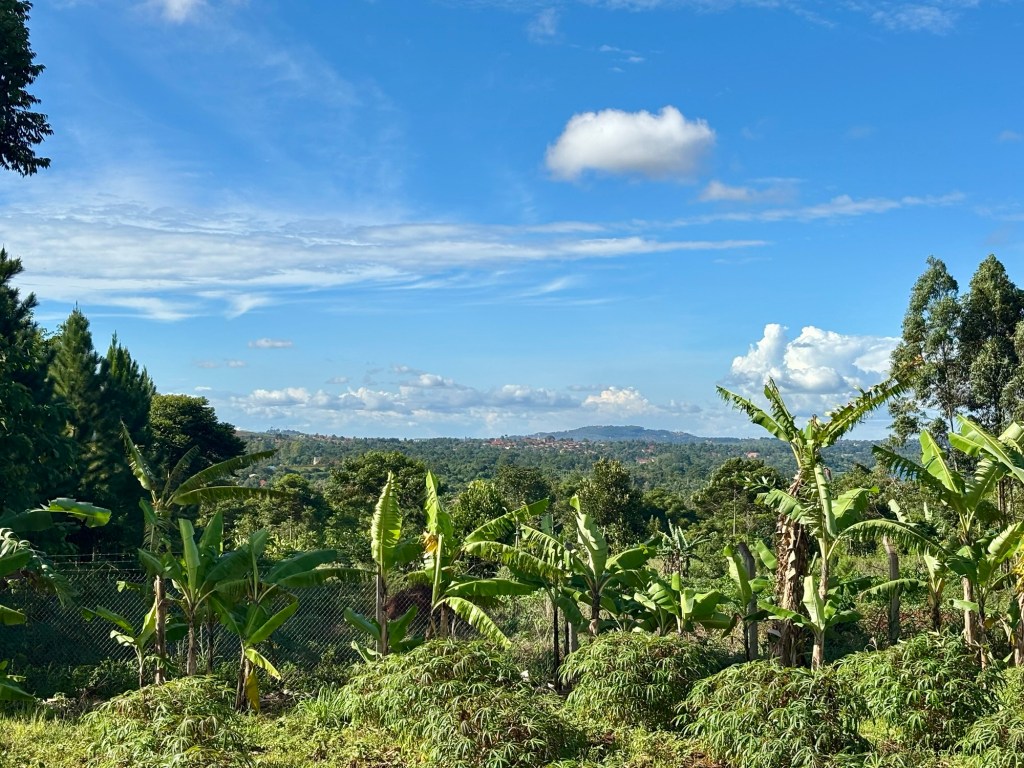
Then the road begins pulling upward.
On the back of a motorcycle, you feel it immediately — that drag against your body as both you and the boda driver lean forward while the gears of the boda shift to reach the top of the hill. Once you arrive, Imprint Hope sits only a short walk away.
Below the hill, the land opens.
Lake Victoria stretches outward beside fishing farms resting against the shoreline below. Further out, where the shore and water meet, a marsh-like strip of land settles quietly between them.
When I reach Imprint Hope, the morning begins with greetings and a morning meeting that ends in prayer. We discuss the day and how our individual duties work alongside other team members and departments.
Then we disperse to our individual tasks and duties. This is where my role begins to vary. Depending on the day, I may move between several departments, assisting with organization, creativity, team activities, or opportunities to help team members encourage the mamas and support their children.
In the afternoons, while the mothers participate in classes and training, the children spend time playing together while a few of us help care for and watch over them throughout the day. Many days, I find myself rocking at least one child to sleep around nap time. More than once, I have ended the day with one — or several — asleep in my arms, in my lap, or nearby at some point.
As the weeks continue, the training the mothers receive slowly builds upon itself. What begins with naming disabilities and understanding their effects gradually moves into understanding each child’s specific needs, nutrition, medical care, parenting, attachment, and learning how to better respond to each child individually.
Naming a disability and understanding it more clearly helps begin pushing back against the stigma, fear, and misunderstanding that so often surround disability.
By week five, conversations surrounding parenting and attachment begin shifting the room even further.
Then, by week seven, family members join the mothers and begin learning from them what they have spent the previous weeks studying and practicing together.
In places where children with disabilities are sometimes viewed with stigma, uncertainty, or misunderstanding, there is something powerful about watching mothers speak openly about what they have learned while family members sit beside them listening. It creates space for both the child and mother to be seen differently — not through fear or assumption, but with greater understanding, value, and dignity.
At the end of week seven, there is a graduation ceremony where the mothers are honored for their diligence, sacrifice, and resilience throughout the program. During this week, husbands, fathers, aunts, uncles, and friends are welcomed as well. The graduation becomes a place of encouragement where families are able to see these women loved, celebrated, and supported in an atmosphere where stigma has no place.
When the graduation is complete, the mothers, children, and their families are loaded into several vehicles and transported back toward their homes in Kayunga District. Their journey with Imprint Hope does not end after seven weeks, but their stay in the residential program does.
From there, they join Ubuntu support groups where they are able to continue growing in ways that support both them and their children.
And eventually, the road begins again. After a couple weeks of evaluations, the process and this road continue as a new group comes and the learning begins again.


 Lightly Woven Ink
Leave a comment